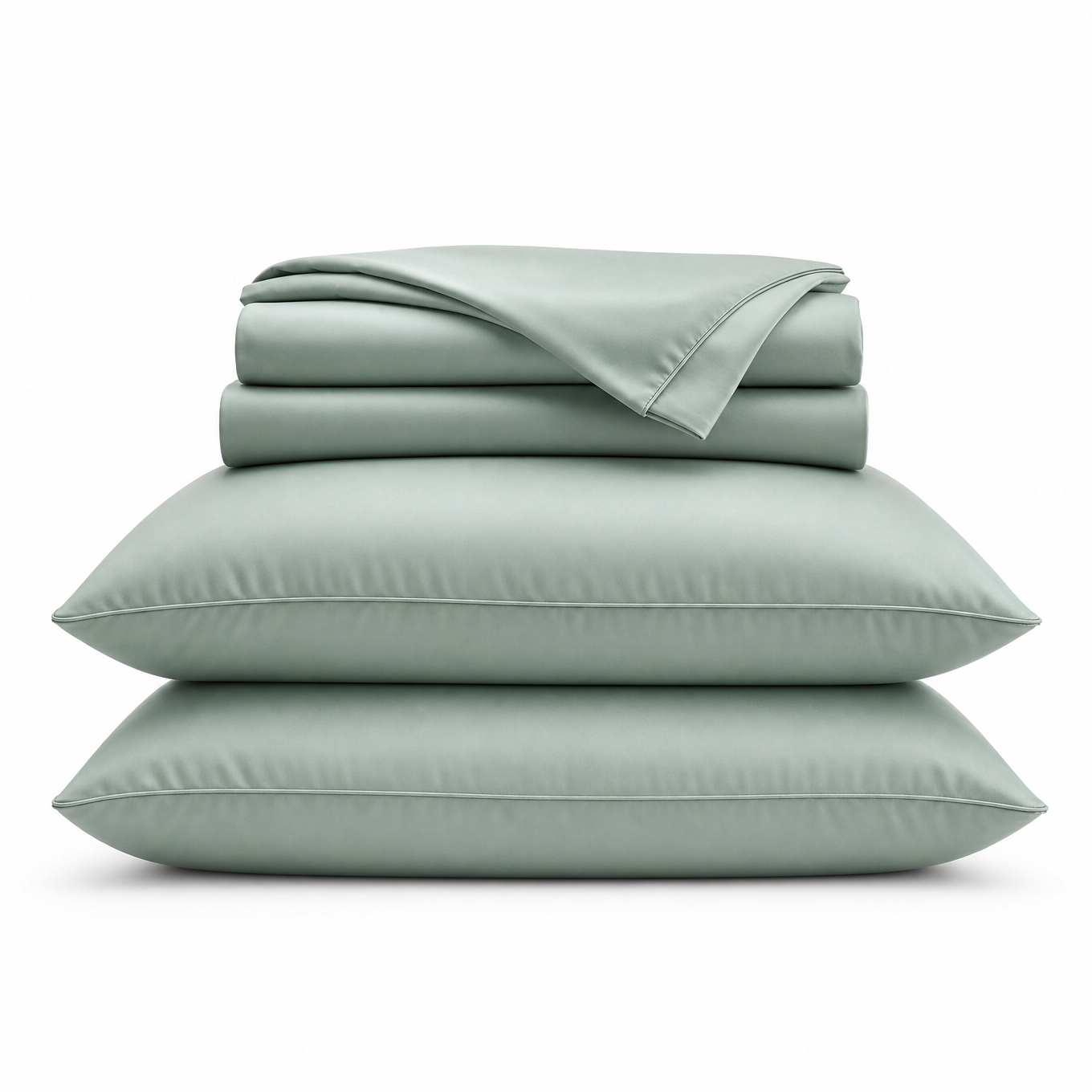
Pull the care label out of your duvet cover tonight. If it says polyester, microfiber or "easy-care blend", the fabric against your skin is a plastic — polyethylene terephthalate, the same polymer used for drink bottles, drawn into fine thread and given a softer name.
Most people never think about it. Bedding is bought for the photo and the price, sealed in plastic wrap, and the label is never read again. Yet you spend around eight hours a night — a third of your life — wrapped in it.
A third of your life is spent wrapped in fabric. Few people ever ask what that fabric is made of.
Synthetic textiles don't stay perfectly inert. Studies have found that polyester fabrics shed microplastic fibres as they're used and washed — one of the largest sources of microplastic in household dust and laundry water. Many "easy-care" and wrinkle-free finishes add formaldehyde-based resins on top. All of it sits directly against your skin, in a warm bed, night after night.
Plastic also simply sleeps badly. Polyester doesn't breathe and doesn't absorb moisture, so heat and sweat have nowhere to go. If you regularly wake up damp and overheated under "hotel-style" bedding, the fibre is the reason.