You have slept under plastic for years — and no one ever told you.
Eight hours a night. A third of your life. Skin pressed against a petroleum fibre with a friendlier name. Here is what that is quietly doing to your sleep — and the plant-based bedding people are ripping the plastic out of their beds for.
Reach behind your neck right now and find the care label on your duvet cover. If it reads polyester, microfiber, or "easy-care blend", the fabric touching your skin is a plastic — polyethylene terephthalate, the exact polymer used to blow drink bottles, only drawn into thread and handed a softer name.
You would never drink from a plastic bottle for eight hours straight. Yet that is roughly how long you lie sealed inside that same plastic every single night — a third of your entire life — and almost no one has ever told you.
Eight hours a night. A third of your life. Wrapped in a fibre made from oil — and you were never asked.
Plastic bedding doesn't sit there quietly. Polyester textiles shed microplastic fibres as they're slept on and washed — one of the largest single sources of microplastic in household dust and laundry water. Many "wrinkle-free" and "easy-care" finishes then bond formaldehyde-based resins onto that plastic. All of it rests against warm skin, in a closed bed, night after night, for years.
And it sleeps badly on top of it. Plastic doesn't breathe and won't absorb moisture, so your body heat and sweat have nowhere to escape. If you keep waking up damp, overheated, and vaguely restless under "hotel-style" bedding, the fibre is the culprit — not you.
眠
The alternative
What if nothing petroleum-born ever touched your skin again?
Lyocell is spun from eucalyptus pulp — a botanical fibre, not a plastic one. It breathes, it wicks, it drapes like silk. The third of your life you spend in bed is finally spent against a plant, not a bottle.
Temperature
Plastic traps your heat. Eucalyptus lets it go.
Polyester seals warmth and sweat against your body. Lyocell breathes with you all night, releasing heat instead of hoarding it — so you sleep straight through instead of kicking the duvet off at 2 a.m.
50%More moisture wicked vs cotton
Origin
Grown from a tree. Not drilled from a well.
Lyocell is spun from FSC-certified eucalyptus pulp in a closed loop that recovers around 99% of its solvent. No petroleum, no microplastic — a fibre that returns to the earth instead of outliving you in it.
99%Of solvent recovered, closed-loop
Against your skin
The plastic you can't see — gone.
No shedding microfibres, no formaldehyde wrinkle-resins, nothing petroleum-born against your skin for eight hours a night. Just a plant fibre, certified OEKO-TEX® 100 and smooth as silk from the first night.
8Hours a night, finally plastic-free
The list
8 things that change the night you strip the plastic out of your bed
01
You stop overheating at 2 a.m.
Plastic traps heat against your body; eucalyptus fibre lets it go. Lyocell breathes and regulates temperature all night, so the 2 a.m. kick-the-covers-off ritual quietly ends.
02
You wake up dry, not clammy
Polyester repels sweat and holds it against your skin. Lyocell wicks roughly 50% more moisture than cotton and releases it fast — no more peeling a damp sheet off at dawn.
03
No more microplastic against your skin
There is nothing petroleum-born left to shed. No plastic fibres breaking loose into your bed, your lungs, or your wash water — just a plant fibre that stays a plant fibre.
04
No hidden resins or formaldehyde finishes
No wrinkle-proofing chemistry, no "easy-care" coatings. The smoothness comes from the fibre itself, and the whole thing is certified OEKO-TEX® 100 — tested for substances that don't belong against skin.
05
Your skin gets calmer
A dry, silk-smooth surface gives dust mites, bacteria and odour far less to cling to. It's the reason sensitive, reactive and allergy-prone sleepers are usually the first to switch — and the first to notice.
06
It feels like silk from the very first night
A cool, fluid drape with nothing to break in. No stiffness, no scratch, no wash-it-ten-times waiting period. Night one already feels like a different bed.
07
It doesn't turn stale
Plastic holds body oils and odour, which is why old polyester bedding starts to smell no matter how often you wash it. Lyocell's dry surface stays fresh far longer between washes.
08
It's grown, not drilled
Spun from FSC-certified eucalyptus in a closed loop that recovers around 99% of its solvent — plastic-free from the fibre all the way to the packaging. Made from trees, not oil.
You would never drink from a bottle for eight hours. You sleep wrapped in the same plastic every single night.
YUKI Sleep
Plastic vs plant
One bed, two very different fibres
Polyester beddingYUKI Lyocell
What it actually isPetroleum-based plastic fibre (PET)Botanical fibre from eucalyptus pulp
OvernightTraps heat against the bodyBreathes and regulates all night
MoistureRepels sweat — stays clammyWicks ~50% more than cotton, dries fast
Against your skinSheds microplastic, carries resin finishesOEKO-TEX® 100, nothing synthetic to shed
Where it comes fromDrilled from oil, plastic in every washFSC eucalyptus, closed-loop, ~99% solvent recovered
8Hours a night under it
33%Of your life, spent in bed
50%More moisture wicked vs cotton
99%Solvent recovered, closed-loop
50% OFF
The summer swap
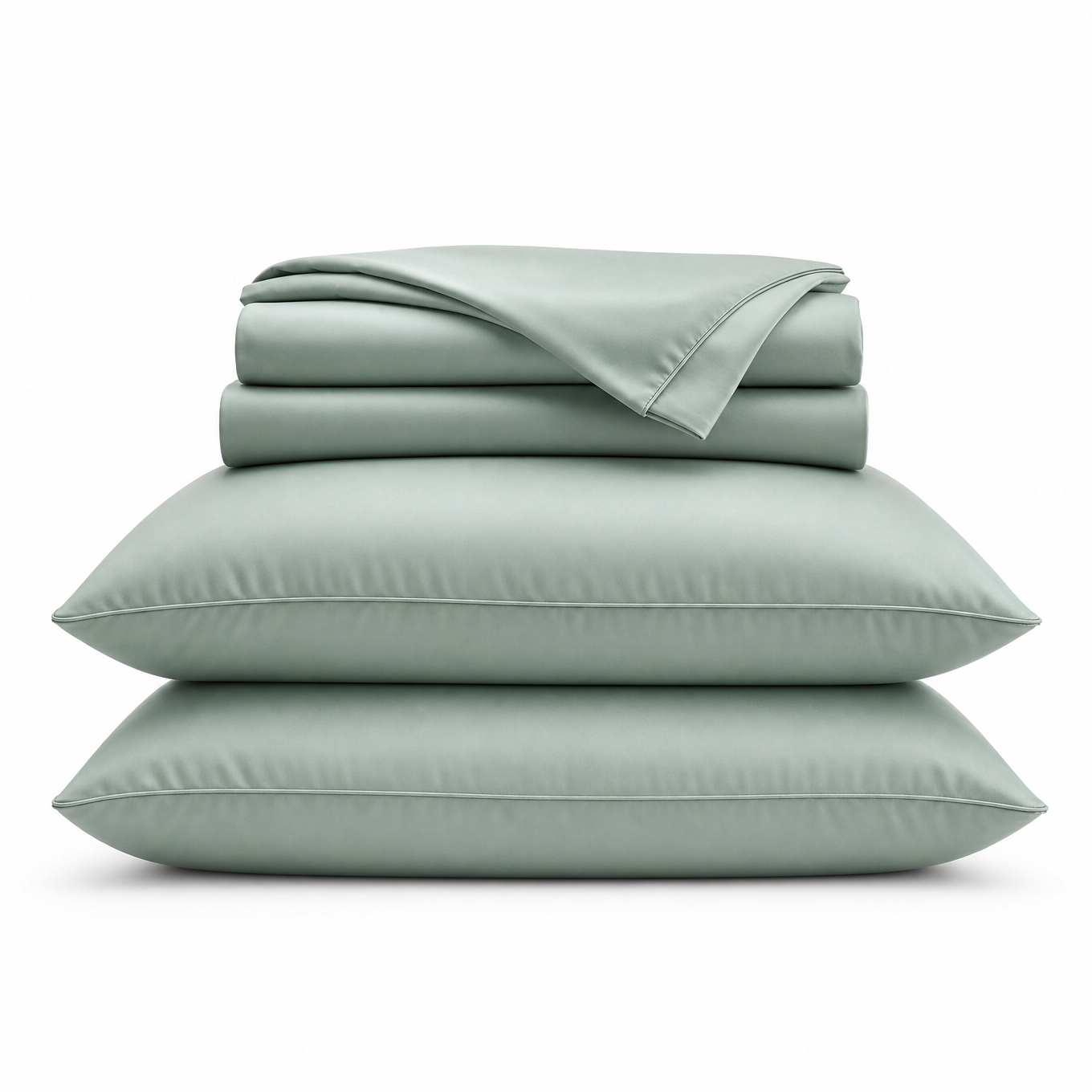
The Lyocell Bedding Set
Duvet cover, fitted sheet and two pillowcases in pure eucalyptus Lyocell. Strip the plastic out of your bed in a single order.
£232.00£94.00per set · summer sale
OEKO-TEX® 100 certified
Sleeps cooler & wicks ~50% more than cotton
Zero microplastics — plastic-free to the packaging
Summer sale applied automatically at checkout. While stock lasts.
From people who made the swap
★★★★★
"First bedding I don't wake up sweating under. The difference was obvious the very first night."
Emma V.Verified buyer · Amsterdam★★★★★
"Checked our old duvet cover after reading about microfiber — 100% polyester. Never again. This feels like a cool hotel bed, minus the plastic."
Daan K.Verified buyer · Utrecht★★★★★
"My skin reacts to almost everything. Three weeks on these sheets, zero irritation — and they look beautiful straight out of the wash."
Sofia M.Verified buyer · Antwerp
Before you switch
Is polyester bedding really "plastic"?
Yes. Polyester and microfiber are polyethylene terephthalate (PET) — the same plastic used for drink bottles, spun into thread. Lyocell contains none of it: it's a cellulose fibre made from eucalyptus wood pulp, certified OEKO-TEX® 100.
How is Lyocell different from cotton?
Cotton is natural too, but Lyocell wicks around 50% more moisture, dries faster, and feels noticeably smoother — closer to silk than to percale. It's also gentler on the planet: closed-loop production recovers ~99% of the solvent it uses.
How do I claim the 50% summer sale?
No code needed. The discount is already applied on the product page — add your size to the cart and the sale price is what you pay.
What if I don't feel the difference?
Sleep on it for 30 nights. If it doesn't sleep cooler and calmer than the plastic you had, send it back — free returns, full refund.
眠
Stop sleeping under plastic.
A third of your life is spent in bed. Spend it against a plant, not a petroleum fibre. 50% off this week only.